
Vehicles on X-Isle—often fragile, repurposed civilian transports—are typically used for rapid Logistical Planning Optimization (LPO) and long-range traversal. However, in emergency engagement scenarios, the sudden abandonment of a vehicle must be treated not as a failure, but as a final tactical opportunity. **Kinetic Ejection Theory (KET)** is the doctrine that utilizes the vehicle’s momentum and structural mass to execute a devastating last-ditch offensive maneuver against pursuing ARC units, transforming a guaranteed crash into a calculated shockwave.

This analysis details the protocols for controlled abandonment, leveraging the vehicle’s instability to maximum tactical effect against ground-based threats.
The Principle of Mass and Momentum Transfer
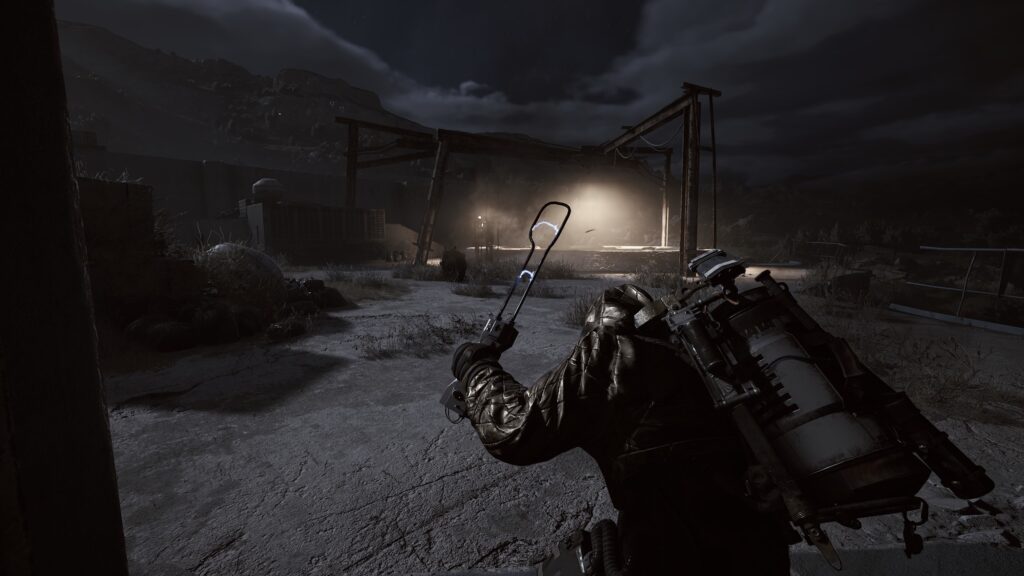
KET relies on the principle of transferring the vehicle’s high kinetic energy upon impact directly into the pursuing ARC unit. The larger the vehicle, the higher the mass transfer and resultant damage. This maneuver is highly valuable against heavy ground units (Warden, Enforcer) whose structure can be significantly compromised by uncontrolled kinetic shock, even if the primary chassis remains intact.
Ejection Protocol and Timing
The success of KET hinges on the precise timing of abandonment. The Raider must eject just before the vehicle reaches maximum velocity or impact with the target. Ejection is often executed utilizing the Slide-and-Shoot maneuver to immediately transition to CQC defense after leaving the cockpit. Premature ejection wastes the kinetic energy; delayed ejection results in the Raider’s incapacitation due to vehicular damage.
- **Targeting:** Aim the vehicle’s trajectory at the center-mass or primary power conduit of the lead ARC pursuer.
- **Follow-Up:** The remaining squad must immediately focus fire on the unit struck by the vehicle, capitalizing on the temporary damage and disruption (TCA, KOD).
Weaponizing Vehicle Volatility (EHM)

Repurposed civilian vehicles often utilize unstable fuel cells or volatile salvaged components, enhancing the Shockwave effect upon impact. KET advises Raiders to deliberately target vehicles carrying highly unstable payloads (e.g., scavenged industrial fuel) toward the center of an ARC patrol. The resulting explosion, amplified by the vehicle’s mass, provides an effective, high-yield area denial strike (EW, ABM) that costs the Raider no dedicated explosive resources.
Ejection Seat Defense and Vertical Evasion (VHS)
The Raider must immediately seek vertical or environmental cover after ejecting. The sudden kinetic impact of the vehicle’s crash draws immediate ARC attention (TCM), but the resulting debris cloud also offers a brief window of Visual Interdiction (VIS) for evasion. The Grappling Hook should be utilized to ascend to high ground, allowing the Raider to confirm the effectiveness of the kinetic strike and reposition for overwatch.
| KET Phase | Goal | Consequence if Failed |
|---|---|---|
| **Targeting** | Maximum Kinetic Shock on ARC unit. | Vehicle crashes harmlessly, wasting high-mass asset. |
| **Ejection** | Raider maintains high momentum after leaving the vehicle. | Raider suffers incapacitation from vehicular damage. |
Conclusion: The Ultimate Sacrifice of Asset

Kinetic Ejection Theory transforms a vehicle from a logistical asset into a calculated weapon. By committing the vehicle’s mass and momentum to the destruction of the enemy, Raiders ensure that even a failed transport run becomes a moment of decisive tactical superiority against the rigid pursuit of the ARC Collective.



Leave a Reply