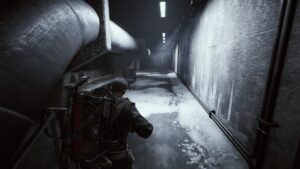
Mastering “Third-Party Management” in Arc Raiders is a distinct tactical progression path that defines your squad’s resilience. In the Exclusion Zone, gunfire acts as a dinner bell, attracting every opportunistic team within hearing range. For players aiming to survive the “infinite fight” and successfully extract after a victory, developing a “Two-Angle” playbook forms a reliable framework for mastery. It is about understanding that a fight is never over until you have cleared the surrounding 360-degree perimeter.

This guide examines how to approach multi-team engagements efficiently, focusing on the “external-eye” technique, the logic of the two-angle defensive split, and the strategic importance of the “immediate reset” to ensure you aren’t caught looting when the next team arrives.
The Logic of the Compound Engagement
Third-partying is a deterministic reality of extraction shooters. If you engage in a fight that lasts longer than sixty seconds, you must assume a third party is already moving to your location. The “Two-Angle Rule” is a strategy designed to prevent your squad from being “sandwiched.” It requires the team to split their focus: while two players focus on finishing the current engagement (Angle 1), the third player (the Anchor) holds a wide, external angle looking for incoming threats (Angle 2). You are effectively fighting the current enemy and the future enemy simultaneously.
This division of labor prevents the “tunnel vision” that leads to squad wipes. Most teams die to a third party because all three members were looking at the same loot bag or the same downed enemy. By maintaining a dedicated “Lookout” angle, you turn the third party’s surprise into a predictable encounter. You aren’t just reacting to the new threat; you are prepared to greet them with suppressive fire before they can reach your flank. Mastery of this split-focus is what allows a veteran squad to survive even the most crowded Hot Zones.
Core Tactics: The “Loot-Watch” Split and Perimeter Scanning
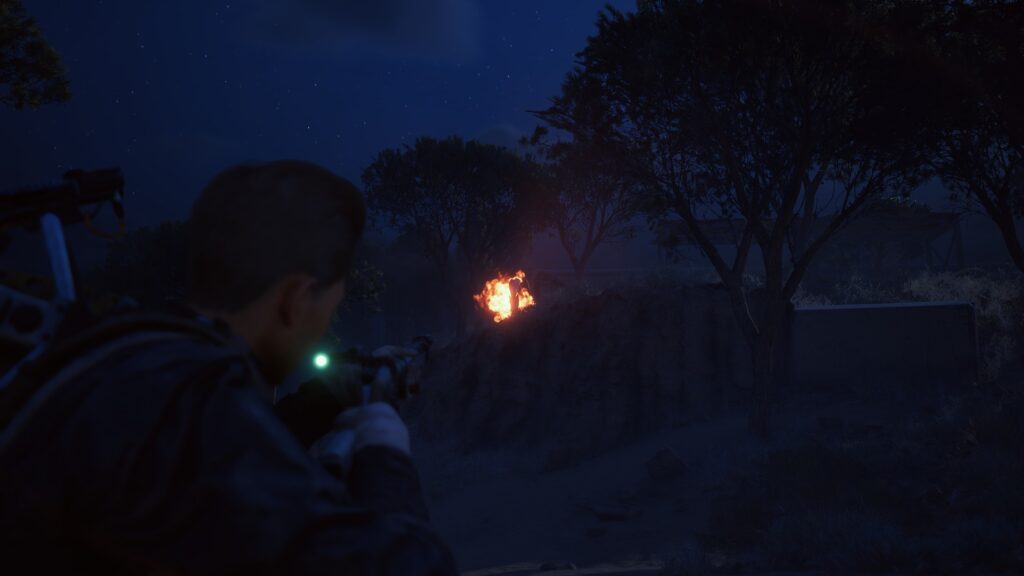
To manage multiple threats without being overwhelmed, you must utilize these specific squad habits:
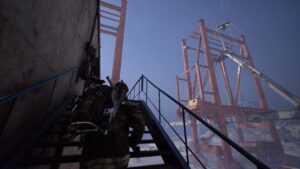
- The 2-1 Defensive Split: During the final moments of a fight, one player must immediately peel off and find a high-ground “external” angle. Their only job is to scan the horizon. They do not help with the looting or the “clean-up” of the first team.
- The “Immediate Reset” Rule: Never loot until your armor is full and your weapons are reloaded. If a third party strikes while you are mid-animation, you are a liability. Reset first, then loot with one eye on the environment.
- Ping-Based Perimeter: Use pings to mark “sectors” of responsibility. “I’m watching North and East; you watch the entrance.” This ensures no angle is left un-scanned while the team recovers.
Managing the “Sandwich” and the Tactical Exit
The most dangerous scenario is being “sandwiched”—caught between the team you were fighting and a new team arriving. If this happens, your “Two-Angle” discipline must shift to “Exit Priority.” Do not try to win a two-front war. Instead, identify the “weakest” side of the sandwich (usually the team you’ve already damaged) and push through them to break the containment. Your goal is to reach the “outside” of the fight so you can watch both teams engage each other. In Arc Raiders, the team that is *not* in the middle is the team that wins.
By rotating out of the center, you transform the situation from a “2v1 against you” into a “3-way chaos” where you hold the positional advantage. This requires decisive leadership and the ability to abandon loot bags at a moment’s notice. A raider who is too greedy to leave the “center” of a third-party engagement is a raider who will likely lose everything. Mastery of the tactical exit ensures that your squad remains the predator, even when the match tries to turn you into the prey. Stay on the outside, and let the others delete each other for you.
The Sound of the “New Door”: Audio Cues for Third Parties
Your ears are your best third-party detection tool. You must learn to listen for the “asynchronous” sound—a gunshot or a footstep that doesn’t match the rhythm of your current engagement. If you are fighting a squad with SMGs and suddenly hear a distant Sniper shot, that is a third party. If you hear a door open behind you while you are pushing a room, that is a third party. Training your brain to filter out the noise of the *current* fight to hear the “new* sound is a hallmark of elite play.
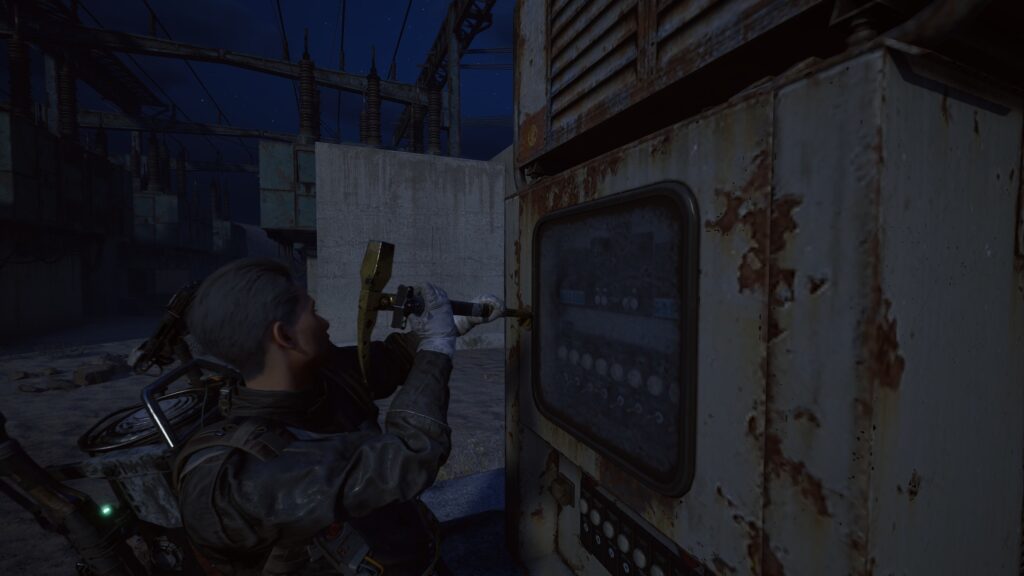
Integrating this auditory awareness into your “Two-Angle” routine provides you with the crucial five-second warning needed to reposition. You stop being surprised by the “hidden team” because you heard them coming two rooms away. By the time they swing the corner, your Anchor is already pre-aimed at their head. This superior situational awareness is what allows you to survive messy engagements and extract with the loot of multiple teams. Master the sound, hold the angles, and dominate the chaos of the Exclusion Zone.
Conclusion: Geometry of Multi-Team Survival
Third-party management rewards the vigilant and the organized. By implementing the Two-Angle Rule and prioritizing an immediate reset over looting, you nullify the advantage of opportunistic teams. Integrating these defensive habits into your routine ensures that your squad remains a resilient force, providing a stable path to victory through superior situational control in the Exclusion Zone.
Leave a Reply